Recently, the research teams led by Prof. Wu Yuping and Prof. He Jiarui from the School of Energy and Environment and the New-Generation Energy Storage Center, SEU, have published a paper in Energy & Environmental Science, a top international journal, with the title “Dynamic localized domains of metallic glasses enable high capacity SbBi anodes for potassium ion batteries”. This work reports a novel strategy of regulating dynamic localized metallic glass domains to boost the electrochemical performance of alloy anodes.
SbBi alloy anodes have attracted extensive attention for potassium ion batteries (PIBs) due to their high theoretical capacity. However, their practical application is severely hindered by drastic volume expansion and sluggish kinetics, which cause electrode pulverization and rapid capacity fading. Amorphous-based alloy systems have been proposed as a promising solution, however, excessive amorphous content leads to low Coulombic efficiency and poor cycling stability.
To address this challenge, the team developed a new strategy based on the dynamic localization of amorphous phases. Using a dual intermetallic heterojunction composite Cu₂Sb@SbBi₂ as a model system, they innovatively established a deformation induced dilatation model to precisely control the amorphization level and form dynamically localized amorphous structures. This unique design effectively suppresses the rapid capacity decay of alloy anodes in PIBs.
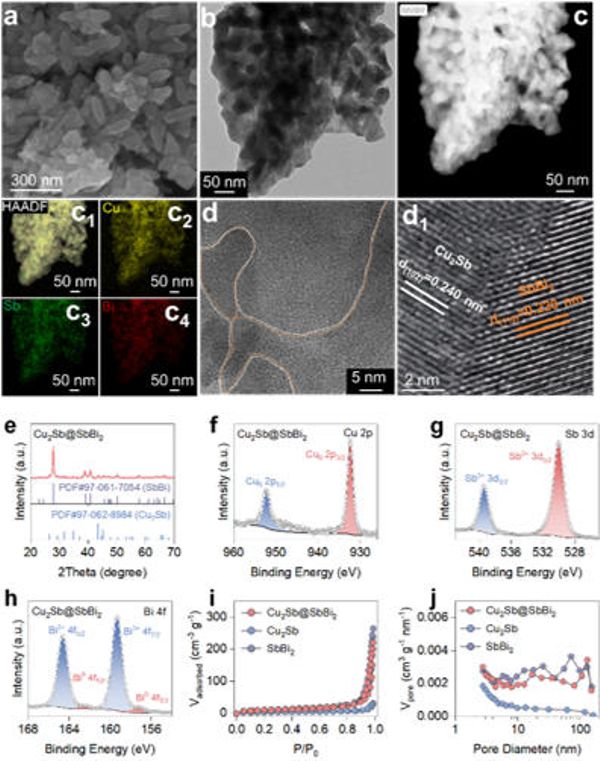
Fig. 1 Morphology and structural characterization of the material
In situ XRD reveals multi step alloying phase transformations (K(SbBi) and K₃(SbBi)) during discharge, along with reversible lattice expansion and contraction of Cu₂Sb, which provides structural elasticity. HRTEM images of electrodes discharged to 2.5 V, 0.3 V, and 0.01 V confirm atomic rearrangement at the interface driven by deformation induced dilatation, resulting in the formation of amorphous phases. The small deformation of Cu₂Sb spatially constrains SbBi₂, driving the formation of dynamic amorphous domains at the interface and establishing a dynamic localization process of the amorphous phase. As the potassiation proceeds, the amorphous region gradually shrinks while the crystalline region grows, and this process is fully reversible. Such a dynamic and reversible mechanism significantly enhances the potassium storage performance of SbBi alloys.
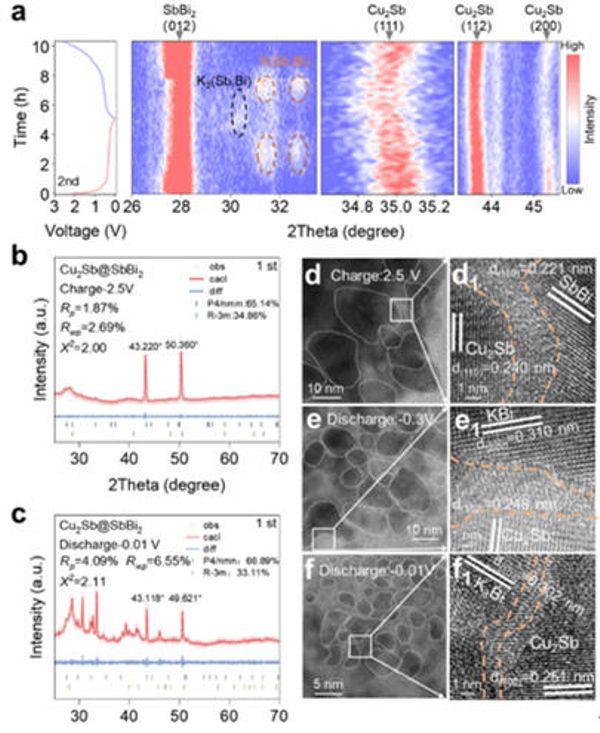
Fig. 2 Potassium storage mechanism and dynamic transformation of localized amorphous domains
Based on these findings, the team proposes a general strategy of dynamic localized amorphous regulation to overcome the inherent limitations of alloy anodes in PIBs. This dual intermetallic heterojunction design (exemplified by Cu₂Sb@SbBi₂) demonstrates that dynamic and localized amorphous phases can substantiallyenhance the performance of alloy anodes for potassium ion batteries.
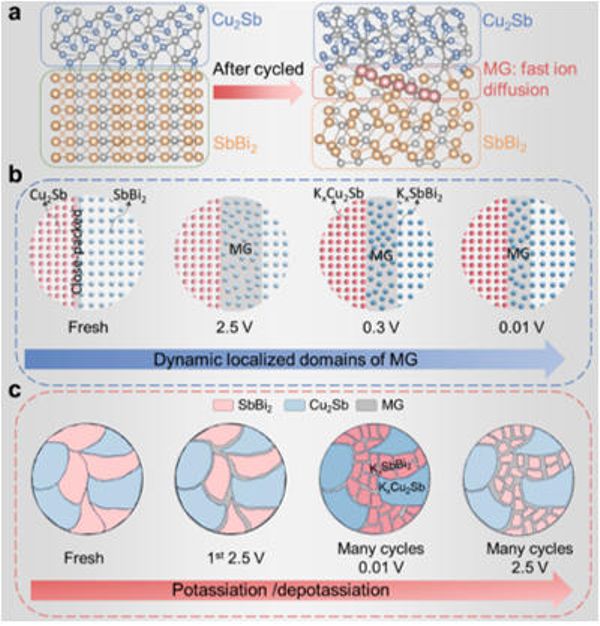
Fig. 3 Schematic illustration of the dynamic evolution of localized amorphous domains
Liu Xi, a PhD candidate from the School of Energy and Environment, SEU, is the first author. Prof. He Jiarui from the same school is the corresponding author. This research was supported by the National Natural Science Foundation of China, the Jiangsu Key Research and Development Program, the Jiangsu Outstanding Youth Fund, and the High Level Talent Startup Fund of SEU.
Paper’s link: https://pubs.rsc.org/en/Content/ArticleLanding/2026/EE/D6EE01770C
Source: School of Energy and Environment, SEU
Translated by: Melody Zhang
Proofread by: Gao Min
Edited by: Leah Li